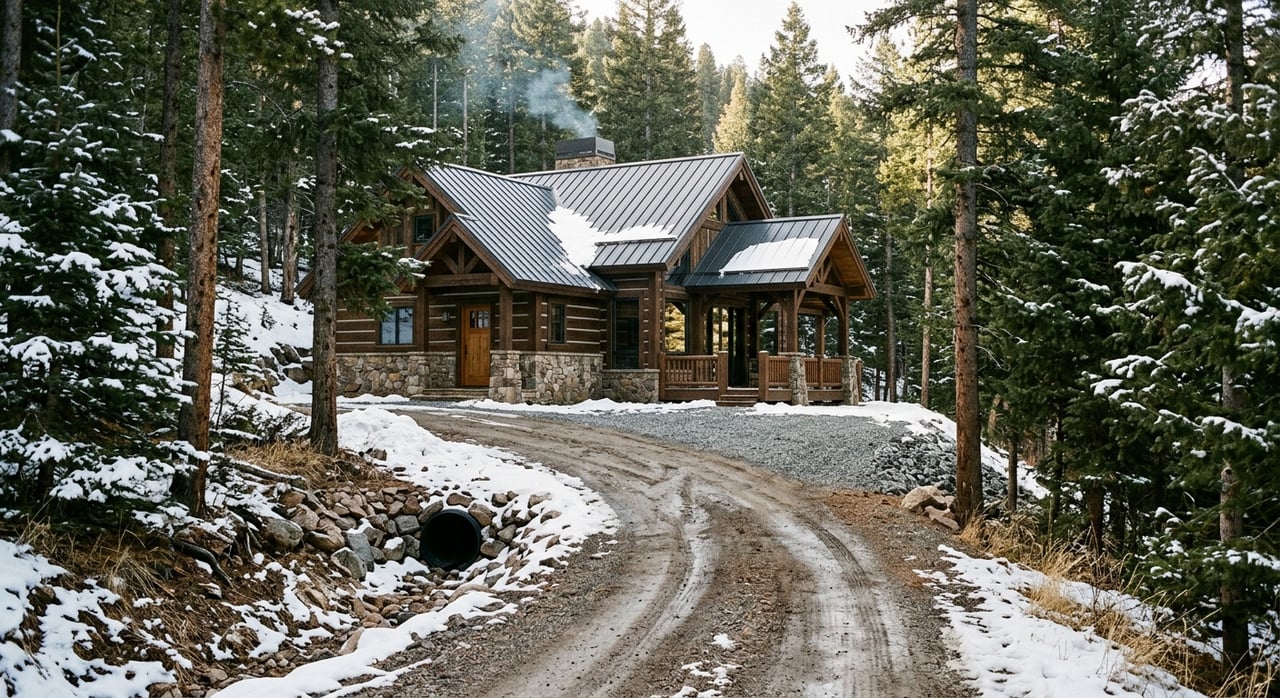
Thinking about a remote mountain property in Sula? The setting can be spectacular, but the details matter just as much as the views. If you are dreaming about a cabin site, recreation property, or a year-round home with privacy, you need to look closely at access, utilities, wildfire risk, and buildability before you buy. Here’s what to focus on so you can move forward with clearer expectations and fewer surprises.
Why Sula mountain property feels different
Sula sits within a part of Ravalli County shaped by mountain terrain, public-land adjacency, and a more remote layout than many valley-floor properties. Ravalli County’s 2024 Community Wildfire Protection Plan notes that outside the valley floor, much of the land is managed by the U.S. Forest Service, which helps explain both the area’s recreation appeal and its remote feel.
That same mountain setting can create practical challenges. The county plan says steep terrain can speed fire spread and make access harder, which means a parcel that looks simple on a map may function very differently in real life. In remote areas, the road in, the slope, and the season can all affect how usable a property really is.
Weather is another part of the equation. NOAA data from the Sula 3 ENE station at 4,475 feet shows annual normals of 16.17 inches of precipitation and 26.8 inches of snowfall. Higher-elevation parcels in the surrounding mountains may experience more winter disruption than those station normals suggest, so it is smart to think beyond the base numbers.
Access comes first
Before you get too attached to a remote parcel, confirm how you actually reach it. Ravalli County says it maintains about 550 of 1,450 public road miles and specifically advises buyers to investigate road conditions and maintenance before purchasing.
That matters because not every road is county-maintained, and winter service is limited. Under the county’s winter roadway policy, priority routes are serviced first, then collector roads, then residential and minor local access roads. The county also says it cannot guarantee bare pavement and may wait until after snowfall ends or about four inches have accumulated before dispatching snow removal.
For mountain property, you should also ask whether the route is open year-round. Montana Department of Transportation information includes seasonally closed mountain roads with no winter maintenance, including Skalkaho Pass in Ravalli and Granite counties. A summer access route is not always a winter access route.
Questions to ask about road access
- Is the road county-maintained, private, or seasonally closed?
- Who plows the road in winter, and is that arrangement documented?
- Are there shared road maintenance responsibilities or costs?
- Is there an approved legal access route to the parcel?
- Will you need an approach permit for a driveway or field access?
Ravalli County requires approach permits for field access, residential approaches, and commercial approaches. The county also requires encroachment permits for excavation in county easements and rights of way. If your plans include improving access, those permit steps matter early.
Legal access is not the same as physical access
A road or trail leading to a property does not automatically mean you have legal rights to use it. If access crosses private land or Montana state trust land, the rules can be different from what a listing photo or map might imply.
The Montana Department of Natural Resources and Conservation says unclear private-access issues should be resolved with the listing agent, title company, or an attorney. For trust-land access, DNRC uses a separate easement process. For remote Sula properties, deeded access, easement terms, and winter-use rights should be part of your due diligence, not an afterthought.
Water, wells, and what to verify early
Many remote mountain properties rely on private wells, and that means you need to do more of your own homework. Montana DEQ says water quality from private wells is not regulated by DEQ and safety is not guaranteed.
DEQ recommends an annual well check-up, including testing at minimum for coliform bacteria and nitrates. It also recommends testing after a flood, service event, or noticeable water-quality change. If a property already has a well, ask for the well log and recent test results if available.
If the parcel is vacant, do not assume a well will be simple or productive enough for your plans. DNRC’s guide for prospective well owners says buyers should not build until they know they have an adequate water supply on the building site. In some locations, that may mean drilling and testing a well before construction starts.
Water due diligence checklist
- Request the well log if a well exists
- Confirm the well yield for your intended use
- Test the water quality
- Ask whether the well location supports your planned building area
- Use a licensed Montana water well contractor or driller for any new work
DNRC also advises well owners to keep a copy of the well log. That record can be important later for planning, service, or resale.
Septic and address issues can slow a project
With remote land, septic approval is often one of the biggest buildability questions. In Ravalli County, the septic process is site-specific, and the county will not issue a permit without a legal address.
The county GIS department requires an Address Request Form before it will issue a physical address. If there is no DEQ subdivision approval, the county requires a site evaluation that includes an 8- to 12-foot soil test hole. If seasonally high groundwater is found, monitoring is typically done from March through October.
That timing can affect your project schedule. If you are buying with plans to build quickly, it helps to understand whether the property is ready for review now or whether seasonal conditions may delay a septic decision.
Floodplain proximity can add another step. Ravalli County says that if a proposed septic system is within 300 feet of a mapped floodplain, a floodplain determination is required. A new dwelling or structure also triggers a non-degradation water-quality review and may require nitrate testing from the nearest well.
Buildability is more than a flat spot
A remote mountain parcel may look buildable at first glance, but county planning materials warn that some parcels may not have legal or physical access, road-access permits, well or septic permits, utilities, or even a usable building site.
Slope, snow, soil conditions, and driveway layout all matter. Ravalli County’s wildfire plan notes that the county includes steep mountain slopes, lodgepole pine forests, and subalpine spruce-fir forests. In spruce-fir areas, deep snowpack can last well into summer, which can affect access windows, site work, and long-term maintenance.
If the parcel is near a floodplain, there may be more review ahead. Ravalli County requires a separate floodplain permit application with site plans, elevations, and related documentation. The county says a complete application is typically decided within 60 days once it is deemed sufficient.
Signs you need a closer buildability review
- Steep grades or limited driveway options
- Heavy tree cover near the proposed homesite
- Signs of wet soil or drainage issues
- No visible utility connections nearby
- Unclear address, septic, or floodplain status
- Seasonal snow conditions that shorten the building season
Wildfire risk should shape your plan
Wildfire is a real part of owning mountain property in Ravalli County. The county’s Community Wildfire Protection Plan says homeowners can reduce risk by hardening the home and managing the 100-200 foot Home Ignition Zone around it.
The same plan places fire season roughly from May through October, with the driest summer months carrying the most fire activity. That does not mean you should avoid remote property, but it does mean you should budget for vegetation management, defensible space, and thoughtful building choices.
DNRC provides free wildfire risk home assessments to Montana homeowners. For an existing home or a future build site, that kind of assessment can help you understand where to focus your time and money.
Open burning also has rules. Ravalli County’s burn-permit program requires permits for open burning and daily activation before each burn, with county administration from March 1 through November 30 and DEQ burn permits available from December 1 through the end of February.
Water rights can affect how you use the land
If a parcel includes a spring, pond, irrigation setup, or another non-domestic water feature, verify the water-right status before you assume you can use that water. DNRC says new or expanded water uses generally require a permit or notice.
DNRC also advises buyers to search for water rights appurtenant to the property rather than relying only on listing information. This is especially important for buyers looking at small ranch, stock-water, garden, or irrigation use.
A smart due diligence plan for Sula buyers
Remote mountain property can be rewarding, but it usually demands more fieldwork than a typical in-town purchase. The goal is not to make the process feel overwhelming. It is to help you ask the right questions while you still have options.
Start with the basics and verify each item directly. A practical review often includes access, easements, winter road use, well information, septic feasibility, floodplain status, wildfire risk, and water rights. When you work through those items early, you can make a better decision about whether a property fits your plans, your timeline, and your budget.
If you are considering remote property in Sula, local guidance can make a real difference. Wanda Sumner brings hands-on knowledge of Bitterroot Valley land, access, and site challenges, so you can evaluate a property with a clearer picture of what ownership may involve.
FAQs
What should you verify before buying remote property in Sula, MT?
- Confirm road access, maintenance responsibility, legal easements, well information, septic feasibility, wildfire risk, and any floodplain or water-right issues.
How is winter road maintenance handled for mountain property in Ravalli County?
- Ravalli County prioritizes major routes first, followed by collector roads and then minor local roads, and it does not guarantee bare pavement or immediate snow removal.
Do you need a legal address before getting a septic permit in Ravalli County?
- Yes. Ravalli County says it will not issue a septic permit without a legal address, and the GIS department requires an Address Request Form before issuing a physical address.
Are private wells in Montana regulated for water quality?
- Montana DEQ says private well water quality is not regulated by DEQ, so buyers should test the water and review the well log and yield before relying on the supply.
Why is wildfire planning important for remote mountain property in Sula?
- Ravalli County identifies wildfire exposure as a key issue in mountain terrain, and homeowners are encouraged to manage the 100-200 foot Home Ignition Zone and consider home-hardening measures.
Can you assume a spring or pond on a Sula property can be used freely?
- No. DNRC says new or expanded water uses generally require a permit or notice, so you should verify the property’s water-right status before assuming any use.