Are you looking at acreage near Stevensville and wondering how water rights actually work? You are not alone. In the Bitterroot Valley, ditches, shares, wells, and priority dates can feel confusing when you are trying to buy or sell. This simple guide gives you the essentials, the local context, and a clear checklist so you can validate a parcel before you commit. Let’s dive in.
What a water right means in Montana
Montana follows prior appropriation, which means “first in time, first in right.” In a dry spell, senior rights get served before junior rights. The priority date attached to a right can affect whether water is available when you need it.
A water right is the right to use a specific amount of water for a specific purpose, such as irrigation or domestic use. Use defines and limits the right. Rights can specify rate, volume, season, point of diversion, and place of use.
The legal framework lives in state law and is carried out by state agencies and courts. You can read the statutes on the Montana Legislature website for Title 85, which covers water use and appropriation. For practical guidance and records, start with the DNRC Water Rights resources.
Why priority dates matter
Your priority date determines your spot in line during shortages. Two neighboring parcels can have very different outcomes in a dry year based on seniority. When you review records, always note the priority date next to the claimed amount and purpose.
Surface water vs. groundwater in Stevensville
Stevensville sits on the Bitterroot Valley floor, where historic ditches deliver surface water from the river and tributaries. Many small ranches rely on these networks and on shallow aquifers that can interact with surface flows.
Surface water, like rivers and ditches, is typically administered by priority. Groundwater from wells is also subject to water rights and may require permits, with limited exemptions for small domestic or stock uses. Exemptions are not unlimited and can be shaped by local rules and adjudication outcomes.
Surface diversions around Stevensville
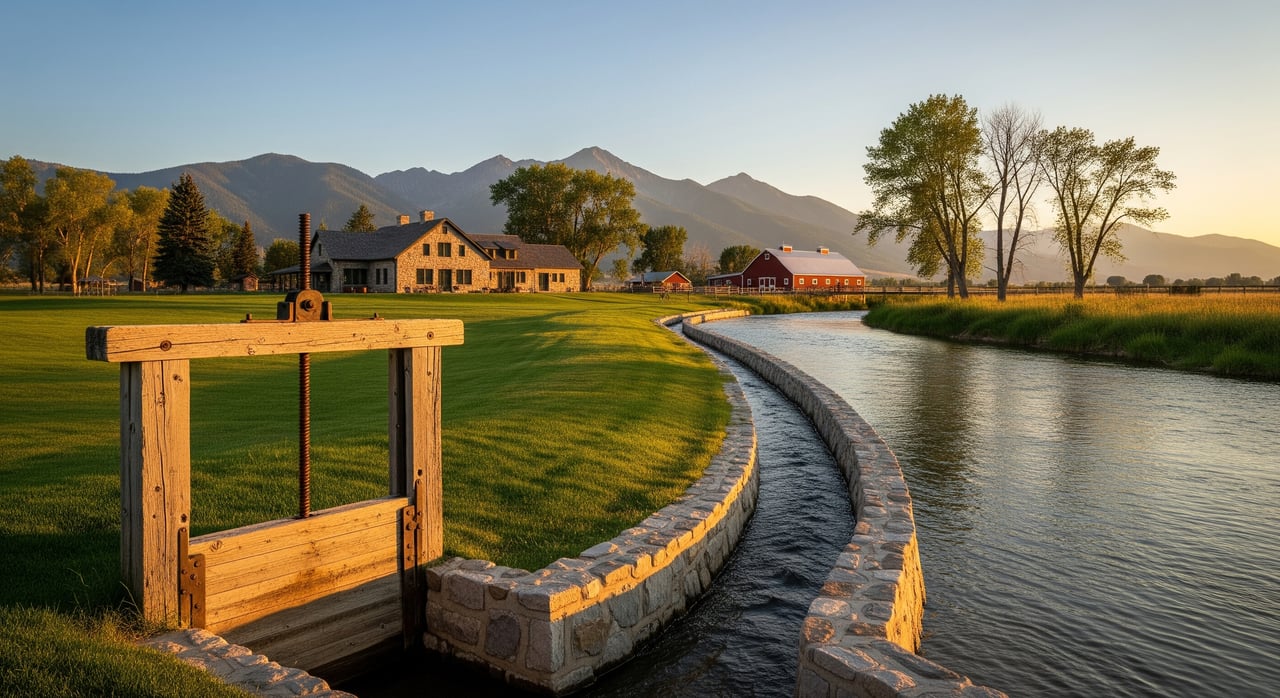
If you see a headgate or lateral ditch, that does not guarantee delivery. The right to receive water usually depends on recorded rights and ditch company rules. Verify both the legal right and the practical delivery arrangements before you assume irrigation comes with the parcel.
Domestic wells and exemptions
Many parcels have domestic wells, including older wells with logs on file. Some small domestic uses may be exempt from permitting, but those exemptions have limits. Check rules, well logs, and any required permits with the DNRC before you count on a new or existing well for expanded use.
Ditch companies and shares
Ditch companies and irrigation districts operate the canals and laterals that carry water to member lands. Some companies hold the actual water right, while others deliver water tied to rights held by individuals. Delivery usually depends on membership and ditch shares that represent a proportional interest.
Shares may be personal property and can transfer separately from the land. In Stevensville, it is common for subdivided parcels to have unclear share assignments. Do not assume shares follow a deed. Confirm with both the ditch company and county records.
What to confirm before you buy
- Whether the parcel is on the ditch company delivery map.
- Whether shares are assigned to the parcel and how transfers are documented.
- Typical delivery schedule and allotment per share in a normal and a dry year.
- Any fees, maintenance obligations, or rules on changes of use.
Research a Stevensville parcel step by step
Below is a practical sequence you can follow for a Stevensville property. Use it to verify if water rights exist, who controls them, and whether you can get water delivered.
Step 0: Gather parcel details
Collect the legal description, township-range-section, and the Ravalli County parcel number. You will need these to match records. If possible, also note current and prior owner names.
Step 1: Review the deed chain
Check deeds for language that conveys or reserves water rights. Look for ditch easements, share certificates, or references to irrigation rights. Search earlier documents for recorded transfers of ditch shares that might sit outside the main deed.
Where to look: The Ravalli County website lists Clerk & Recorder and Assessor resources.
Step 2: Check county GIS
Use county maps to locate ditches, laterals, and any easements touching the parcel. Being adjacent to a ditch is not the same as being served by it. Verify the presence of easements and physical delivery points.
Where to look: The Ravalli County website and GIS map tools.
Step 3: Search DNRC records
Query the DNRC system by owner name, legal description, and source name. Pull any water-right abstracts that list the parcel’s place of use. Note the right type, priority date, rate, volume, season, point of diversion, and place of use.
Caveat: Ditch company arrangements may not show in a simple name search. Follow up directly with the company if the paper trail is thin. Start at the DNRC Water Rights resources.
Step 4: Confirm Water Court status
Look up Water Court abstracts for the basin. An abstract summarizes the court’s view of a claimed or declared right, including the place of use and the priority date. Use this to cross-check DNRC records and deed language.
Where to look: The Montana Water Court.
Step 5: Call the ditch company
Identify the local ditch company that serves the area. Ask if the parcel is on their delivery list and whether shares are assigned. Request their process for share transfers and any requirements at closing.
Tip: Historical delivery can be useful, but you still want documents that prove share ownership and transfer rules.
Step 6: Review wells and plans to drill
If a well exists, get the well log and confirm whether the well use aligns with permits or exemptions. If you plan to drill, talk to a licensed driller and DNRC about local conditions and any restrictions. Start with DNRC’s well and water-use materials at the DNRC.
Step 7: Note constraints that affect value
- Priority: Junior rights can be curtailed in dry years.
- Place of use: If the abstract’s place of use does not include your parcel, you cannot apply the water without a change process.
- Changes: Moving a point of diversion or changing use typically requires DNRC review to avoid injury to other rights.
For statutes, use the Montana Legislature website and look for Title 85.
Step 8: Validate before you close
Write specific language into the purchase agreement for ditch-share and water-right conveyance. Ask for the seller to provide transfer forms required by the ditch company. Consider a contingency or holdback tied to confirmed water access.
Contract and closing tips
- Put water rights and ditch shares in writing. Spell out what conveys and which documents the seller will deliver.
- Align the right’s place of use with the parcel you are buying. If it does not match, plan for a change process before you rely on that water.
- Ask the title company to search for separate share certificates. Shares can be recorded outside the main deed chain.
Common pitfalls to avoid
- Assuming irrigation comes with the land without ditch-company confirmation.
- Relying on a neighbor’s verbal history without documentation.
- Overlooking a junior priority date that could be curtailed in a dry year.
- Counting on a new domestic well without checking DNRC rules and local conditions.
Local contacts and tools
- DNRC for rights searches, permits, well logs, and change guidance. Start with the DNRC Water Rights resources.
- Montana Water Court for decrees and abstracts. Use the Water Court website.
- Ravalli County for deeds, parcel IDs, and GIS mapping. Visit the Ravalli County website.
- Montana State Library for statewide mapping and resource data. Explore the Montana State Library.
- USGS for regional streamflow and groundwater context. Review the USGS hydrologic data.
Mini glossary
- Appropriation: The legal right to divert and use a specific amount of water after putting it to beneficial use.
- Priority date: The date the right was established. Senior rights are satisfied first during shortages.
- Beneficial use: The purpose that defines and limits the right, such as irrigation or domestic.
- Point of diversion: Where water is physically taken, like a headgate or well.
- Place of use: The specific land where the right can be applied.
- Ditch company shares: Units that entitle you to a proportional delivery through the system.
- Water Court abstract: A summary that lists claimant, priority, amount, point of diversion, and place of use.
Next steps
If you are weighing a Stevensville acreage or small ranch, tackle the checklist before you write an offer. Confirm what conveys, verify practical delivery, and match the paper record to the ground. A little homework now can save you costly surprises later.
If you want local help navigating ditch shares, well records, or Water Court abstracts during a purchase or sale, reach out to Wanda Sumner for a calm, step-by-step plan.
FAQs
What is “prior appropriation” in Montana?
- It is the rule that the earliest, or senior, water rights are served first during shortages. Your priority date determines your position.
Do irrigation shares always transfer with the land?
- Not automatically. Ditch shares can be separate from the deed. Always confirm transfer requirements with the ditch company and county records.
How do I confirm a parcel’s irrigation right?
- Check the deed, search DNRC records for place of use, review Water Court abstracts, and verify ditch-company share assignments.
Are domestic wells always exempt from permits?
- No. Some small domestic and stock uses may be exempt, but exemptions have limits. Check DNRC guidance and local conditions before relying on an exemption.
Can I change the place of use on a right?
- Changes are often possible but usually require DNRC review to ensure no injury to other rights. Plan time for the process.
Where do I find authoritative records?
- Start with the DNRC for rights and wells, the Montana Water Court for abstracts, and the Ravalli County website for deeds and GIS.