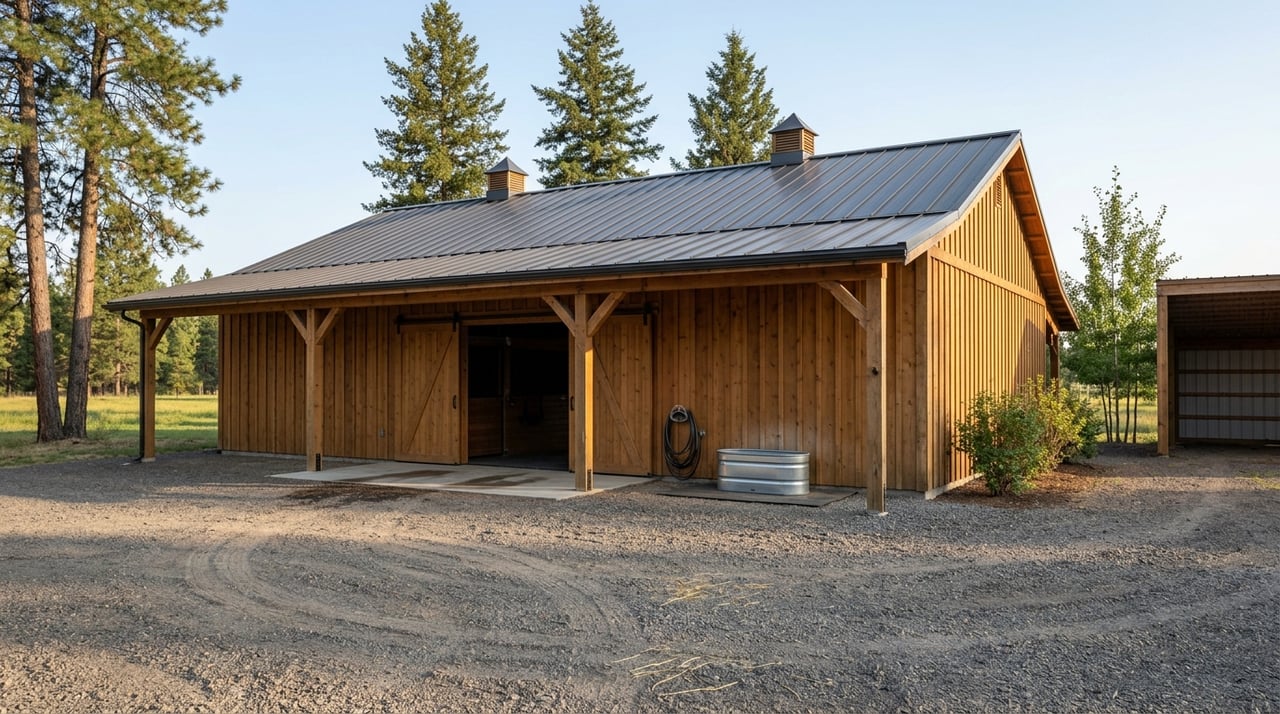
If you are shopping for a horse property in Corvallis, it is easy to fall for mountain views and open acreage first. But a pretty parcel is not always a practical setup for horses. In the Bitterroot Valley, the right property comes down to layout, water, fencing, and day-to-day function, so this guide will help you spot what matters before you buy. Let’s dive in.
Why horse-property details matter in Corvallis
Corvallis sits in Ravalli County, where agriculture remains a major part of the local landscape and economy. County policy documents show substantial pasture resources, and the county’s 2022 livestock inventory included 3,333 horses and ponies. That local context matters because horse properties here are not just about square footage or a barn count.
You also need to think about how the land works over time. Pasture quality, water access, weed management, and usable layout can make a major difference in both horse care and property value. A setup that looks simple on paper may require more work, upgrades, or due diligence than expected.
Start with the land layout
Acreage is often the first number buyers ask about, but layout matters just as much. A well-shaped property can support easier rotation, cleaner access, and safer movement for horses and equipment. An awkward parcel can limit how well you use the land.
University of Minnesota Extension notes that rectangular pastures encourage exercise and that larger areas are often more useful when divided into smaller paddocks for rotation. It also advises avoiding wet areas, steep slopes, wetlands, ponds, creeks, dense woods, and irregular hillside layouts when planning horse pasture use.
Look beyond total acres
A 10-acre parcel with usable, well-drained ground may work better than a larger tract with wet corners, steep grades, or fragmented sections. When you tour a property, try to picture how horses would actually move through it in spring mud, summer grazing season, and winter conditions.
Ask whether the layout supports separation between grazing, turnout, and work areas. If the property forces every use into one space, pasture wear can happen quickly.
Plan for rotational use
A horse property tends to function better when pasture can rest between uses. Dividing larger areas into smaller paddocks gives you more control over grazing pressure and footing conditions. That matters in a working valley where pasture quality is part of the long-term value of the land.
As a rule of thumb, roughly two acres per grazing horse during the grazing season is often used for planning. Still, that is only a starting point, not a guarantee, because pasture condition, water, and management all affect what the land can support.
Evaluate barns for function first
A barn should work safely and comfortably every day, not just photograph well. The most important features often are not decorative at all. Airflow, drainage, safe footing, and access usually matter more than finishes.
University of Minnesota Extension says horse barns need air exchange to remove moisture and improve air quality. Penn State Extension adds that open stall partitions, eave and ridge openings, and avoiding overhead hay storage can improve ventilation and reduce respiratory and moisture issues.
Check barn ventilation
When you walk into a barn, notice whether it feels damp, stuffy, or stale. Good ventilation helps reduce moisture buildup and supports healthier air quality. Enclosed naturally ventilated barns should have both inlets and outlets to keep air moving.
You should also look at how stalls are arranged and whether airflow seems blocked. A barn that traps moisture may create more maintenance and health concerns over time.
Review drainage and footing
Flooring and drainage play a big role in daily use. Penn State Extension notes that stall-floor materials should be chosen with leg and foot health in mind, and that subfloor construction and drainage strongly affect performance.
On a showing, check whether the barn stays dry and whether wash water drains away from high-use areas. In Corvallis, it is smart to ask how the setup handles winter mud and cleanup, since poor drainage can quickly turn a usable barn into a problem area.
Think about safety and emergency access
A workable barn layout should support both daily chores and emergency response. University of Minnesota Extension recommends multiple exits, fire-resistant materials, good ventilation, separate hay storage, easy access to water, and a location away from flood-prone or wet areas.
Penn State also notes that faulty wiring and stored hay are common barn-fire risks. On site, look for clear exits, sensible storage placement, and enough room for a truck and trailer to reach the barn if needed.
Build around dry lots and paddocks
In Montana, dry lots can be one of the most useful parts of a horse property. They help protect pastures during wet conditions and give you a controlled turnout option when grazing needs a break. A property without a good dry-lot plan may be harder to manage than it first appears.
University of Minnesota Extension recommends that dry lots provide shelter, water, feed space, and at least 400 square feet per horse. It also suggests placing dry lots next to the pastures they serve.
Position matters
A dry lot should connect naturally to nearby paddocks or grazing areas. Gates, laneways, and traffic flow matter here. If horses, tractors, and people all have to squeeze through one muddy bottleneck, the layout may need work.
High-traffic pads near gates, feeders, shelters, and water sources can help reduce mud. That can make a noticeable difference in how usable the property stays during shoulder seasons.
Inspect fencing and gates carefully
In Ravalli County, fencing deserves close attention. Montana has an open-range context, so you should not assume every boundary around a horse property is livestock-proof. Montana Fish, Wildlife & Parks notes that many property owners may need to fence out neighboring livestock rather than assume boundary fencing is already sufficient.
That makes boundary review and fence maintenance a core part of due diligence. A fence that looks acceptable from the road may not be ideal for horses or for long-term upkeep.
What to look for in horse fencing
University of Minnesota Extension says perimeter fences should be at least 5 feet tall, highly visible, and free of sharp edges or projections. It also advises against barbed wire for horses.
As you tour, check whether fence lines are consistent, visible, and in solid condition. Ask yourself whether the fence suits horse containment first, not just appearance.
Gate placement affects daily use
Gates are easy to overlook until you try to move a trailer, mower, drag, or tractor through them. University of Minnesota Extension recommends placing gates in corners closest to the direction of travel, avoiding low spots where water pools, and sizing gates for equipment.
For dry-lot passages, a 16-foot gate is recommended for equipment access, along with a smaller gate for people or a single horse. A thoughtful gate setup can save time, reduce mud, and make the property much easier to use.
Confirm trailer access on site
Listing photos do not always show how a property handles a truck and trailer. A horse property should allow practical access to the barn, loading area, or holding paddock without tight turns, soft shoulders, or muddy pinch points.
This is one of those details that matters more when you are actually there. If possible, stand where a trailer would enter, turn, back, and exit. Functional access is part of a property’s real usefulness, not just a nice extra.
Water rights, wells, and utilities matter
Water can be one of the most important parts of horse-property due diligence in Corvallis. If a parcel relies on irrigation, stock water, or certain groundwater uses, the water-right picture needs careful review.
The Montana Department of Natural Resources and Conservation says a recorded water right is required for most uses to be valid and defensible. It also says buyers should use the property geocode and Water Right Query System to look up existing rights tied to the parcel.
Do not assume a well tells the whole story
DNRC notes that a well log does not itself create a water right. That means a property can have a well and still require further review of irrigation, stock, or domestic use rights.
For buyers comparing horse properties, this is a major practical point. Water access that seems straightforward may deserve a deeper look before you move forward.
Test private well systems
Montana DEQ says private wells are not regulated the same way as public water systems. The agency recommends an annual well check-up and advises testing at least for coliform bacteria and nitrates.
If you are buying a horse property with a private well, that testing should be part of your checklist. Reliable water quality is just as important as water quantity.
Review weeds, floodplain, and county rules
Horse-property due diligence in Corvallis should also include local land-use review. Ravalli County’s Planning Department handles land-use planning, subdivision review, and floodplain management, and some areas are subject to citizen-initiated zoning districts.
That means two similar-looking properties may have different rules for barns, corrals, driveways, or future improvements. It is important to confirm parcel-specific details instead of relying on assumptions.
Watch for noxious weed issues
Ravalli County policy documents note that noxious weeds must be managed under local weed-district rules and disclosed when land is sold. A pasture can look green from the road and still have weed problems that affect its usefulness.
When you tour a property, ask what weed management has looked like and whether any recurring issues are known. This is especially important if you want pasture that is practical, not just scenic.
A smart Corvallis tour checklist
When you walk a horse property, it helps to stay focused on the features that affect everyday use. A beautiful setting is important, but function should lead the decision.
Use this practical checklist during showings:
- Confirm pasture acreage and shape
- Check whether larger grazing areas can rotate well
- Inspect barn ventilation, exits, and hay-storage setup
- Look at stall flooring, drainage, and mud control
- Review fence height, visibility, and overall condition
- Test gate placement for horses, people, and equipment
- Check truck-and-trailer access and turnaround space
- Ask about irrigation, stock water, and recorded water rights
- Test the private well
- Review septic capacity
- Confirm floodplain, zoning, and subdivision rules with Ravalli County
- Ask about noxious weed management and disclosures
Why local guidance helps
Horse properties in Corvallis often follow a pattern of home-plus-land, commonly with barns, loafing sheds, paddocks, hay storage, or even arenas on roughly 10 to 20 or more acres. But even when two properties seem similar, their function can be very different once you factor in access, drainage, water, and county rules.
That is where local, hands-on guidance matters. If you are buying from out of the area or comparing multiple acreage properties, having someone who understands land use, site access, well and septic questions, and rural layout can help you make a more confident decision.
If you are looking for a Corvallis horse property and want a practical second set of eyes on barns, pastures, access, and land details, connect with Wanda Sumner. She brings local Bitterroot Valley knowledge and hands-on property insight to help you evaluate what really works.
FAQs
What should you look for in a Corvallis horse property barn?
- Focus on ventilation, drainage, safe footing, multiple exits, separate hay storage, and workable access for daily chores and emergencies.
How much pasture do you need for horses in Corvallis, MT?
- A common planning rule of thumb is about two acres per grazing horse during the grazing season, but actual needs depend on pasture condition, water, and management.
Why do water rights matter for horse properties in Ravalli County?
- If a property relies on irrigation, stock water, or certain groundwater uses, recorded water rights can affect how the land is used and whether those uses are legally supported.
What fencing is best for horse properties in Corvallis?
- Horse fencing should be highly visible, at least 5 feet tall for perimeter fencing, and free of sharp edges or projections, and barbed wire is generally not recommended for horses.
What county checks should you make before buying horse property in Corvallis, MT?
- Review floodplain status, zoning or district rules, subdivision history, access issues, noxious weed disclosures, and any limits that could affect barns, corrals, driveways, or future improvements.